Sunday, June 9, 2013
The Secret Six: Part 6
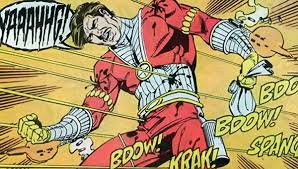
I finished rereading the entire run of the Secret Six today. It was obvious Simone had big plans for the series if it had continued. Nothing comes of the team working for Waller. In fact, the last year is mostly spent involved in crossovers as an attempt to boost the readership.
Paul Cornell had been given the title Action Comics to write. Normally, I'm sure he would have been thrilled but this happened to be a year where he couldn't use Superman in DC's flagship title. Cornell used Lex Luthor as the main character and made a compelling read for the villain in the short term. During Blackest Night, Lex got a taste of wielding a Power Ring (like Green Lantern's Green Ring) and wanted to regain that power for himself. The whole year was a pretty fun read until the very last issue, where Superman had to come back and salvage the plot. Deus ex machina as a plot device kind of bores me.
At any rate, the Secret Six crossover with Action Comics so that Scandal Savage and Vandal Savage have another chance to work out their family issues. Then, the Six turned up in Birds of Prey so that Catman could con Huntress into not being attracted to him anymore. Finally, the Six crossed into Doom Patrol for a kind of pointless crossover.
It is always fun to see which visiting authors actually read the characters they are trying to write. The main trick is Ragdoll. If you nail his perverted sense of humor, you pretty much have the character. Everyone else, you can script normally. Simone herself writes Birds of Prey so no issues there. Cornell seemed to actually get the Six pretty well and might have one day been a decent replacement for Simone. Keith Giffen, who wrote Doom Patrol at the time, keep making jokey references to Ragdoll's genitals (he has none) and basically couldn't nail the tone of any of the Six except Deadshot.
Late in the game, King Shark joins the team and adds a delightful level of absurdity to the dialogue. Some of his lines make me laugh. The roster kept growing until the Secret Six became the Secret Eight. The cast was starting to get unwieldy. It was at this point that I think Simone knew she had to wrap things up or pull in a ton of new readers.
The Get Out of Hell Free card from the first arc comes back into play as Scandal finally decides she needs to free Knockout from Hell. Black Alice quits the team and one of the other members reveals that he has stolen the card from Scandal and wants to live in Hell as a ruler.
Weird things happen and the team comes out of Hell with an extra member to take Alice's place. There is some dark stuff and a guest appearance by the Demon (in full rhyming mode).
The final issues amount to a bottle rocket rather than any real fireworks. Bane gets a bug up his ass to break Batman again by killing all of the Bat's friends and allies. Before any of that can happen, Bane leads the Six to attack the Penguin for some reason. All plot lines kind of stop dead in issue 36 as every super hero in the DCU shows up to put down the Six. When Deadshot referenced Butch and Sundance early in the series, he was foreshadowing this last issue. There is a moral conundrum (again) and the villains prove themselves to be honorable (again). But they still get the hell beaten out of them.
The whole thing ends with Bane separating himself from the Six so he can go back to his evil ways. None of this would matter because the whole universe was rebooted a few months later in Flashpoint and then in the new 52. After the 52 reboot, the Suicide Squad was relaunched with Deadshot as the main character. Of course, none of his character carried over when the universe reset. He did end up banging Harley Quinn quite a bit. But I don't think that counts as character. King Shark was also in the new Squad. Scandal, Ragdoll, Jeannette and Catman have yet to resurface. Honestly, I don't think Bane has either. So any character work Simone did was wiped away.
Why didn't this series succeed? Well, it had a marked lack of marquee names, of course. The sex and violence content was very high for such a mainstream book and superhero comics are a conservative medium. Maybe people wanted the political intrigue of the Suicide Squad back (Simone nailed the character interaction, which I think was far more important). The biggest drawback I saw in the writing was that each arc essentially represented the same emotional journey for the characters. They would be hired by someone unscrupulous, one or some of them would decide to fight against the person who hired them (and thus the rest of the team). By the end, they would all learn that they like and need each other. Awwww.
In the last issue, Catman says, "We are always outgunned and we always lose." But he says it with pride. This is kind of a sad truth. I don't think we ever see the team successfully complete an assignment except in the last issue. They are referenced as jokes and losers when they show up in Action and Doom Patrol. With a rep like that, I guess readers didn't want to tag along.
Going back through, I am a little disappointed. This may no longer be my favorite series of the 2000s but it was damn fun. There are plenty of moments I enjoyed and I realized the thing this series most resembles is Firefly. You have a group of criminals and lowlifes who need each other and form a bit of a family.
Seek it out if you like villain stories and can handle some rough stuff in your superhero comics. I'll be back with something completely different soon. So, Catman, are you mad I kind of ran out of gas on this series?
Friday, June 7, 2013
The Secret Six Part 5: Catman and the Redemption Arc
As Deadshot is dragged, kicking and screaming towards nobility through the connections he makes with more morally upstanding teammates, we get to see Catman move in the opposite direction. The entire Secret Six series looks as if it will be about Catman trying to overcome his criminal past and join the ranks of the superheroes.
A quick history of the character: Thomas Blake was a big game hunter turned supervillain. He did Cat related crimes in an orange and yellow costume that was identical to Batman's blue and gray. Sometimes he worked with Catwoman and sometimes against. He was really bottom rung by the time it was implied he was eaten off panel by a gorilla during a Green Arrow story.
Simone worked overtime to rehabilitate Catman the way Ostrander built up Deadshot 15 years earlier. This Catman was accepted by lions as one of their own and became a dangerous hunter of men. Catman and Scandal both have more than a little Wolverine in them, which is good because DC doesn't have that so much. So, you can slim a guy down and make him a kick ass fighter, but then what? You are still left with a character problem in that, he has no character.
From the get go, Blake is being pulled towards the side of the angels. He tips off Green Arrow to the existence of the Society and the Secret Six. He warns the heroes that the Society is planning to attack Metropolis in Infinite Crisis. He and Deadshot are the center of the team with Blake pulling towards the team doing good deeds and Deadshot pulling them towards pure mercenary work.
As the series goes on, Catman becomes a father (yeah, spoiler alert) with Cheshire. He gets oddly protective of Cheshire even after she betrays the team many, many times and tries to kill them. The main series puts Blake through some harsh times. There is an arc dedicated to the fact that his son is kidnapped by a deranged billionaire. Catman loses all humanity...you know, writing all this up, Simone pretty much lifts Deadshot's arc beat for beat from Suicide Squad.
I thought this would provide a nice contrast with Deadshot's development but they are both on the same bumpy path to salvation. Catman doesn't get to almost martyr himself but, otherwise, the emotional ebb and flow is the same.
Looking through all the other characters, Scandal is the only one who softens somewhat in that she develops a fondness for Bane and finds new love with a stripper after her old girlfriend is killed. Ragdoll stays gleefully obscene throughout the entire run. Bane and Deadshot are both kind of ruthless pragmatists with slightly different codes of conduct. As I reread the last 11 issues, I will assess any further developments but I have suddenly lost a bit of respect for this series.
After the Six deal with Wonder Woman and the prison warden who builds a prison based on Dante's Inferno (a neat idea that isn't pursued much), there is a fill-in issue written by Ostrander that brings in his Father Craemer character from the Spectre and Suicide Squad to counsel Deadshot. The Blackest Night crossover kicks in next and, let me vent a bit about this...
The Blackest Night was meant to be the big climax to Geoff Johns run on the Green Lantern. I get the feeling DC editorial pushed the timetable on it up to make it a big summer crossover after the failure of Final Crisis. The concept should have been awesome, the DCU vs. zombies of all the dead characters. Zombies were reaching a peak of popularity at that point and the idea of Batman dealing with his zombie parents or something was kind of cool. However, I think the idea to make them invincible sort of screwed the pooch. You can shoot or blow up a zombie in the Blackest Night and they will just reform. How boring. If you can't stop an enemy, there is no dramatic tension.
OK, so the Blackest Night happens to coincide with Amanda Waller's attempts to lure Deadshot back to the Suicide Squad with an ambush. The Six fight the Squad and then team up to fight the zombies. Of course, the only way it can end is with a deus ex machina. There is another great Deadshot moment at the end as he turns down Waller's job offer in a most unique way.
The next arc is the fall of Catman as the group tries to stop him from losing his soul in pursuit of the men who kidnapped his son. It is a very dark and bleak arc that ends with Catman AWOL.
Then, you have a one-off Ostrander fill-in where the Six are lured into a Most Dangerous Game scenario. It is a cool little one off issue.
The next issue (24) is one of the most baffling of the entire series. It takes place in the wild west and all the characters appear as western versions of themselves. This issue is never explained or contextualized. Just weird.
The next arc follows the Secret...Twelve? Bane and Jeannette have hired on four new members to fulfill a contract made by Spy Smasher (remember how much Simone seemed to love her back in Birds of Prey)? They run headlong into the original Secret Six. Simone sidesteps the big question of how these guys survive when all their missions go wrong and no one ever pays them. She has them working for Amanda Waller again by the end of the arc, so now they will go on dirty missions for the good of the world. Simone has effectively rechristened the Secret Six as the Suicide Squad.
The last bit of issues will have crossovers with Birds of Prey, Action Comics and Doom Patrol. I will also attempt to figure out why no one read this book. For your enjoyment, here is Catman beating the hell out of Batman...
Thursday, June 6, 2013
The Secret Six Part 4: Deadshot
Hooboy, this has been the entry I have been dreading and excited about all at the same time. It is sometimes difficult to articulate what makes a certain fictional character resonate to an individual. Like comedy, one's interaction with fiction is highly subjective. Sometimes you bring more the table as a reader than the writer intends.
Deadshot is, to this day, my favorite comic book creation. He has no powers, his costume is not really cool and, up until the late 1980s, he was kind of a joke. He first appeared in 1950 and, like most comic book villains, he is a dark reflection of his target hero. By 1950, Batman had already cemented most of his rogue's gallery. Joker is the chaos to Batman's order. Scarecrow is the abuse of fear to Batman's use of fear. Penguin is wealth gone wrong to Batman's wealth gone right. It is hard to get a new character to "stick" once most of your bases have been covered.
Deadshot first appeared as a douchebag in a tuxedo with tails, a top hat and a domino mask. He purported to be a crime fighter but was actually just a thief. His big gimmick was that he used guns while Batman did not. Not the most original take on the "Dark Reflection" idea.
Deadshot vanished for a long time and was then polished off and redesigned by Marshall Rogers for the December 1977 issue of Detective Comics (say, wonder why that date resonates with me?). Deadshot was recast as an assassin who "never misses" contracted to kill Bruce Wayne. The look was a little better (still garish) and his modus operandi a little less on the nose but he was still just a c-lister at best. He was good for popping up into crowd scenes of Batman's enemies breaking out of jail or teaming up to kill him but he didn't carry much weight.
Finally, he lands in the Suicide Squad when John Ostrander is put in charge of making the team for the Legends crossover. Ostrander single-handedly made Deadshot a three dimensional character. As the series begins, Deadshot has signed on for the dangerous missions of the Squad. Even after successfully completing a few, he stays with the team. One of the innovations of the Squad comic is that Ostrander would halt the plot for one issue a year to allow the characters to be built up. Over the course of the series, we learn Deadshot has a death wish. He would never kill himself but he doesn't care if he lives or dies. Sort of think Mel Gibson in Lethal Weapon or Bronson in Deathwish.
Through his therapy/romance with the Squad's psychiatrist, we discover that he is carrying around guilt for the death of his brother. His father was highly abusive and, one day, when young Floyd Lawton had suffered enough, he perched in a tree with a gun waiting to shoot his father. Sure enough, his father began beating Floyd's brother (whom Floyd idolized) like clockwork. The branch holding Floyd gave way as he shot, causing Floyd to miss and shoot his own brother through the head.
As the Lawton's were wealthy, the whole thing gets covered up and Floyd leaves home. He studies at being a marksman the same way Bruce Wayne would study at a variety of disciplines. Having killed the only good person in his life, Floyd no longer much cares what happens to him or what he does to other people. He does end up having a son of his own. Within the context of the comics, Ostrander explains that Deadshot can never kill Batman because he looks up to Batman. Whenever the two fight, Deadshot intentionally misses.
This kind of relationship pattern defines the character from that point on. Like Wolverine always creating surrogate daughters, Floyd is always looking for an older brother to look up to. Anyone with a code of ethics or heroic leaning can earn Floyd's respect but he creates space between himself and others with his brusque personality and crude sense of humor.
Deadshot vanished from Suicide Squad for four issues in order to star in his own limited series by Ostrander. And it is dark. Super dark for a mainstream superhero publisher even if it was the 1980s. Floyd takes leave of the Squad once his son is kidnapped. One of the kidnappers is a child molester who wants to get at the boy very badly. In the course of the series, Floyd visits home and his backstory is revealed. Eventually, Floyd finds his son too late, accidentally killed by the molester after being violated. Floyd loses what little humanity he has left at that point, going on a killing spree. It ends with him shooting his own mother. Like I said, dark stuff.
This leads to maybe one of the best Suicide Squad moments. The leader, Colonel Flag, has discovered that the Squad has been blackmailed into performing missions on behalf of a corrupt senator. Flag goes rogue, killing the NSA liaison who coordinated the blackmail. The woman in charge of the Squad program (Amanda Waller) orders Deadshot to stop Flag from killing the Senator by any means necessary. The idea, of course, is for Deadshot to kill Flag. However, Flag definitely falls in the older brother category for Deadshot. Upon arriving at the scene where Flag plans to kill the Senator, Deadshot shoot the Senator himself...thereby obeying Waller's instructions to not let Flag kill him. Deadshot is gunned down by police and is hospitalized for a good chunk of the rest of the run.
Once he comes back, he is never quite the same. The character has no regard for his own life or those of his teammates. When he loses his costume at an airport, late in the run, he tracks down the baggage handler who stole it and kills him. For awhile, he refuses to wear the costume anymore, claiming he has killed Deashot. Eventually, the dictates of the medium required him to wear the suit again.
After the cancellation of the Squad, Deadshot would pop up occasionally. Sometimes he would be back to his solo assassin ways and sometimes be with the Squad. Pretty much every writer used Ostrander's character template for him.
And this is why I relate to the guy. He falls short, always. He wants to be the hero, the good guy, the one everyone admires but he knows he can't. He will always protect those he respects (even in the most insane ways...as we will see in a bit) but everyone else is just a victim to him. Misanthropy, a darkness in his soul and a desire to be better with no ideas how to get there are all facets of a character I can relate to. His complete disregard for the bonds of family is another I can sympathize with. Plus, he is hyper-competent at one thing and I would love to be (not shooting, writing).
When Gail Simone placed Floyd in the Secret Six, I was worried for his future. He is the perfect level of liked but not loved that makes him an easy kill for shock value. Like in Suicide Squad, the early days of the Six were filled with members getting offed. I feel there are no guarantees that Deadshot would stick around and that lack of certainty makes being a fan exciting. Unlike Bruce Wayne or Clark Kent, Floyd Lawton can be killed off.
Simone immediately took the "older brother" role model idea and planted it on her Catman character. Sure, Deadshot killed Catman's pride of lions, but they didn't know each other yet. In a perfect example of how one writes an evil character doing a good thing, towards the end of the "Get Out of Hell Free" card storyline, Deadshot realizes that his team is going to die if they deliver the card as they were hired to do. As he knows they are all prideful and don't really trust each other, he shoots two of them and runs over another two, taking the card for himself. At first you think it is a betrayal but everyone soon figures out that he is taking the card so that, when the hammer falls, it falls on him alone. A selfless action, done in the most violent and brutal way possible. Another reason I like him, he even fucks up his good deeds.
Likewise, in a second mini-series that came between Suicide Squad and Secret Six, Floyd is given another child and is recast as an anti-hero helping Green Arrow stop a super villain. It looks like a redemption storyline but, the tragedy of the character should be that his redemption has to come through personal sacrifice, not through the love of a woman or a child. Simone almost immediately nips this in the bud by having Floyd tell off the mother of his child so she will never want to see him again. This way, her and the child are safe from any enemies Floyd has. Once again, doing the right thing the wrong way.
The next year of the Six is relatively stable in terms of cast. Deadshot finds love with a new teammate (their date night is a lot of fun as the skinheads from issue 1 come back seeking revenge). Catman gets to deal with his "I wanna be Batman" issues a little when he considers taking up the mantle of the Bat. Simone gets to write Wonder Woman one more time as the Amazon guest stars in an arc about a slaver.
The second year gets moving with Ostrander coming in to write a Deadshot-centered fill-in. Going to show that Simone gets the character perfectly, the passing of the baton is totally clean. A new member joins who Simone didn't get to play enough with in Birds of Prey. Half way through the second year, the Blackest Night crossover hit. Ostrander and Simone team up to create a Suicide Squad/Secret Six crossover where Amanda Waller wants Deadshot back on her team and the Six want him to stay. Sure, these are groups of villains but I was pleased to see my favorite character so in demand.
I know the actual discussion of the Secret Six has broken down but I don't want to spoil too many developments in the series as that is half the fun of reading it. At one point Deadshot refers to himself and Catman as Butch and Sundance. This is most apt description I can imagine. The Six see themselves as basically good guys who happen to be outlaws. Perhaps if the series hadn't been cancelled, Catman could have drug Deadshot towards the light.
When the universe rebooted in the New 52, Deadshot was still a great marksman with a "who gives a damn" attitude but he was not fleshed out at all in the first year of the pretty horrible new Suicide Squad series. Now, he is Harley Quinn's boytoy and not all that interesting. If the old DC ever comes back, I hope the old Floyd Lawton does, too.
OK, next time we look at Catman and the rest of the second year of Secret Six ongoing.
Tuesday, June 4, 2013
On Matters of Identity
Besides being a child to my parents, I can't think of anything I have done for 8 years in a row. My schools were divided so that Elementary school lasted the longest (five years). I suppose "student" was part of my identity for a good 15 years but that seemed easy to shed. There was always an ending on the horizon, I knew when it was coming and could prepare. I certainly have not lived in one place for more than 8 years since moving out of my parents' house for college. Being a South Carolinian lasted a good, long time but I don't even really know what that means besides an accident of geography.
I was playing a game on Facebook today and I looked at the avatar I had created for myself over the past five months or so of playing the game. His head was shaved (check), he had brown eyes (check), he was wearing glasses (like I should be) and was wearing a suit and tie. A suit and tie is how I saw myself. Sure, it helps when ladies tell you that you look good dressed up. But still, that was my costume, my outfit for 8 years. I don't have a badge anymore. I don't have a company car. I don't work for any government agencies with fancy names. All that has been taken. Sure, I wanted it all to go eventually but on my terms.
So, who am I if I am not an investigator? I guess some things remain inviolate. I am the son of my parents. I am a white, middle-aged, educated male. I still love comic books and movies and books and trivia and music and comedy. I live in Missouri (how did that happen?). I am a friend to a wide-variety of people I would kill and/or die for. I am also friends with a larger group I would punch and/or be punched for. I am also also friends with an even larger group I would hassle and be hassled for.
For a man, traditionally, your job is who you are. It is how you provide for those you love. It is the tool to get you what you want in a capitalist society. It also fills up most of your hours and mental capacity. It can serve as a source of pride.
I am nervous and excited to see how these pieces of me will be redefined.
I was playing a game on Facebook today and I looked at the avatar I had created for myself over the past five months or so of playing the game. His head was shaved (check), he had brown eyes (check), he was wearing glasses (like I should be) and was wearing a suit and tie. A suit and tie is how I saw myself. Sure, it helps when ladies tell you that you look good dressed up. But still, that was my costume, my outfit for 8 years. I don't have a badge anymore. I don't have a company car. I don't work for any government agencies with fancy names. All that has been taken. Sure, I wanted it all to go eventually but on my terms.
So, who am I if I am not an investigator? I guess some things remain inviolate. I am the son of my parents. I am a white, middle-aged, educated male. I still love comic books and movies and books and trivia and music and comedy. I live in Missouri (how did that happen?). I am a friend to a wide-variety of people I would kill and/or die for. I am also friends with a larger group I would punch and/or be punched for. I am also also friends with an even larger group I would hassle and be hassled for.
For a man, traditionally, your job is who you are. It is how you provide for those you love. It is the tool to get you what you want in a capitalist society. It also fills up most of your hours and mental capacity. It can serve as a source of pride.
I am nervous and excited to see how these pieces of me will be redefined.
The Secret Six Part 3: Why Are Villains Bad Central Characters for Serialized Fiction?
There are very few instances in fiction (that I can think of) in which a pure villain is the main character. MacBeth does some shitty things but his wife is even more vicious than he is. Stories where evil men get redeemed are pretty commonplace. Also, stories where good people get corrupted are common (but they usually end up having some sort of downfall). Dracula really isn't the hero of Dracula, despite his name being on the cover. American Psycho is more of a satire in that (kind of like Dexter) we are tricked into finding a murderer heroic because of who he chooses to kill. Protagonists are usually dynamic characters in some way. Villains, by their nature, are static. Iago starts off evil and ends up evil. The Joker is the same way.
While the villains can be the most entertaining characters to see in any given work, they are very difficult to build a protagonist narrative around. In a medium as conservative as comics, villains are almost always static. They are motivated by madness (Joker), jealousy (Lex Luthor) or (mostly) greed (everyone else). While maybe all of us, as readers, have felt jealous or angry enough to kill someone, Western narrative tradition has instilled a morality clause into popular works. From Hamlet's uncle/father to the teens at Camp Crystal Lake, if you commit an evil action, you will be punished in some way.
With this in mind, if you are trying to be entertained, you don't want your own moral failings thrown back in your face. You weirdly want to be assured that, should you give in to your murderous impulses or greedy desires, you will pay a karmic price for them (or a divinely mandated price depending on which abstract power enforces justice in your worldview). Basically, all entertainment boils down to is being able to explore an alternate lifestyle without repercussions or effort.
So villains kind of stink as your protagonists. While it can be fun to explore your darker side by reading the adventures of killers and psychos, they can't be redeemed, captured (for long) or even punished or your storytelling engine falls apart. That moral slap on your mind's wrist never comes and you are stuck thinking, "Oh, I identify with these horrible characters...what is wrong with me?" And then you don't enjoy it anymore.
John Ostrander (my favorite comic book writer) was the first person in a mainstream book to make villains as heroes work, kind of. He has admitted to being inspired by the movie The Dirty Dozen. In that film, a group of military prisoners (deserters, rapists, murderers) are offered their freedom in exchange for running a suicide mission against the Nazis. As Tarantino tested in Inglorious Basterds, you can put some pretty despicable people in hero roles if they are killing Nazis.
Ostrander dusted off an old title (used for one of DC's old World War 2 comics) and decided to make this the premise: what if villains were offered the chance to go free if they performed missions for the U.S. government? Ostrander populated the team with those dozens of little used villains that appear once or twice and then vanish from comics. Most of them were characters he created himself on titles like Firestorm. Of course, the Dirty Dozen couldn't be trusted to stay on task without a "straight" character or two and neither could the Suicide Squad. Ostrander hedged his bets by including Colonel Rick Flag and Bronze Tiger (the former was also a hero and the latter was a reformed villain).
Eventually, the heroic members were sidelined or phased out and the team started to be made up of more and more villains. That it ran for five and half years surprised me since we were being asked to engage with and encourage the actions of thieves and killers. In the first mission, Captain Boomerang (oy) lets one of his teammates die because she made fun of him and hurt his pride. This petty vengeance makes him a pretty low character but he became a fan favorite. Likewise with Deadshot, who lived to kill (more about him later). The Dirty Dozen trick didn't really work because you would be hard pressed to find villains more villainous than these guys in the DCU. I thought the formula was pretty much perfect, go do these good things or we kill you. Bad guys stayed bad, being forced to do good against their will. You get them to stay true to their cores but still send them on missions where you have a vested interest in their success.
Of course, by the 90s, the anti-hero had taken over comics. Best exemplified by characters like Wolverine and the Punisher, these protagonists were killers and merciless but had their own code of ethical conduct. In a way, this was even more conservative a value system than even the simplistic black and white morality of the Golden and Silver ages. That is an essay for another time but the point is, villains killing for their own gain fell out of favor as heroes killing for the greater good gained that favor.
Subsequent attempts to revive the Suicide Squad have failed. That the Secret Six did not is fascinating to me. Here is a group of villains, no heroes, who offer their services to the highest bidder. At least, that is the premise. Like the Dirty Dozen, they are often set against bigger evil. The Society was certainly more evil if only in quantity than quality than the Six in their first arc. The second arc is all about Dr. Psycho and Vandal Savage, two of the more disturbed villains in the DCU. There is a scene late in the second mini-series where Psycho and Cheshire sit down to eat with Vandal, who tells them a story about the last person who failed him. His guests quickly realize they are eating the subject of the story. Cheshire is sickened but Psycho asks for more salt or says it is a little tough or something horrible. These are horrible people that make other villains look better.
There is a great ending to the mini-series where Mad Hatter finally earns his keep. A moment of pure pathos arises and then is quickly squashed by a revolting act of betrayal. It is comedic and a little sad at the same time. It perfectly captures the tone of the series as a whole.
The Six then vanished for a bit. Gail Simone was still writing Birds of Prey and (again, speculation on my part) wanted to prove the Secret Six concept could fly. So, she wrote them into an arc on Birds of Prey. This time joined by Harley Quinn, the Joker's woman, the group found themselves tangling with the Birds of Prey while that group went through its own power struggle. Here was the essential problem: which team do you highlight? The team whose book you are writing or the team whose book you want to write?
A "Mary Sue" is a comic character that is technically meant to represent an idealized version of its creator but I just take it to mean any pet character. You can always tell which new character is a writer's Mary Sue because they feel the need to make them super competent and better than long-established characters. In this storyline from Birds of Prey, Spy-Smasher is the character Simone is trying to build up so she has her neutralize Deadshot almost immediately. The real fun of the arc comes from Catman and Huntress slowly falling in lust with each other even though they are on different sides of the fence.
Of course, the Birds of Prey get the upper hand as they are good guys and the Six discover that, once again, they were lied to by the people who hired them. The Six join forces with the Birds and, along the way, a dead Justice Leaguer is brought back to life (which was kind of nice). These issues made a good case for the Six as villains and maybe anti-heroes but making them easily duped and defeated doesn't instill confidence for a long running series.
The Six pop up once more in Birds of Prey for one of their cast to be killed off (as necessitated by a crossover). If you didn't happen to pick up that issue, you would have no idea what had happened at the beginning of the Secret Six ongoing series. Even if you had picked up the issue, you might have been like me and thought, "Where the hell did Bane come from?"
Bane was a Batman villain that came out during the anti-hero boom of the 90s. He was the man who broke the Bat and made it necessary for Bruce Wayne to hand his heroic identity off to a mind-controlled assassin of an ancient religious cult (ah, the 90s). In Secret Six, Bane quickly forms a paternal bond with Scandal Savage and takes it upon himself to protect her and teach her how to be a better warrior. Bane's was created with a warped code of honor but in the context of the Six, he becomes a kind of speed limit sign for the group. He condones all sorts of criminal enterprise and violence but he won't hurt children or innocent women. Anyone without that level of morality has to answer to him.
Catman, meanwhile, is called out in earlier stories for wanting to be a hero. He wants the respect of people like Green Arrow and Batman. There is an amusing exchange between Catman and Deadshot in the first issue of their ongoing where the two debate whether the team should be evil, good or continue to just work for whoever has the biggest bank account. Deadshot and Catman enter a convenience store that is being robbed by skinheads (ah, the old Nazi ploy). As Catman insists he can be a hero and Deadshot argues that there is too much violence in his nature to be accepted by the big boys they ignore the robbery around them. Eventually, Deadshot turns the tables on the robbers out of annoyance and tells them all they are doing wrong. He then robs the place himself and walks out. He has to remind Catman that they just left armed angry skinheads alone with Hispanic hostages. Catman has a nice, "Oh, right, I guess a hero would go back and save those people" moment. He does rescue the hostages, Deadshot waits in the car.
The whole scene sort of nicely brings up how these two different Batman villains approach their work with the Six. Both of them did their part to save the lives of the hostages, but Deadshot did it so he could rob the store himself while Catman did it out of an urge to redeem himself. Whatever the motivation, a good deed was done but for selfish rather than altruistic reasons.
The first arc of the ongoing focuses on the hunt for a special "Get out of Hell free" card that entitles the owner to sin as much as they want and still get into heaven when they die. This then, right away is action free of consequence. What if you knew every selfish, evil decision you make isn't counting against you in some imagined afterlife? Would you still live the same way?
At some point in the series, all the Six get their hands on the card. Their individual reactions really helped define them and where they would draw the line of villainy going forward. Of course, they are put up against a monstrous mob boss named Junior who lives in a crate in a basement. Junior is set up as the ultimate evil through scenes we witness and through other characters talking about Junior.
By the end of the first six issues, we have the new core group in place. In fact, the team grows but the early habit of killing off members falls to the wayside. There is not a cop out ending in that one of the Six does end up with the Hell card.
Inevitably, without the threat of death looming over these characters and without being completely amoral, the team starts drifting down the redemption path. Like Lost, the plans to redemption are a little different (Catman vs. Bane seems to be the main philosophical split) but the group ends up being wayyy more heroic than villainous. And the rest of the series is a really good read but it goes to prove the point...purely evil villains can't be protagonists for very long.
Next time, I look at my favorite comic character of all time, Deadshot, as he is pulled between his loyalty to the Six, his loyalty to the Suicide Squad and the fact that he has no loyalty at all. How a character changed from a two-bit Batman knockoff to one of the most engrossing characters I've read should be a fun read...so join me.
In the meantime, ever been exposed to a narrative where you wished the villain was the protagonist? A lot of times, watching slasher horror movies from the 80s, the characters would be so annoying I would be pulling for Jason or Michael Myers but they were never portrayed as the protagonists.
Saturday, June 1, 2013
The Secret Six Part 2: Who Are the Secret Six?
The cover to issue 2 of Villains United asks the question, "Who Are the Secret Six?" I figured the intro to this part would be a good time to answer that. Let it be known, firstly, that I am discussing the third incarnation of the Secret Six. The first was some kind of covert ops team in the 1960s. In the 1980s, there was a revival with characters linked to the 1960s team. But, just like the Suicide Squad started out as a World War 2 team and became much more interesting, so did the third version of the Six. The only through line is that they are led by a mysterious person codenamed Mockingbird. The latest version of the Six don't acknowledge or discuss the previous versions (unlike the Suicide Squad).
So, who are these characters? To think there were only six is to be extremely naive. Like all good stories of consequence, members die or leave on a regular basis. They always try to maintain six members at any given time. I believe by the end there are about 9 members acting all at once, but I could be wrong.
I will address characters as they arise in the story but here are the ones people knew going into Villains United...
Catman- Thomas Blake (I got so excited when I thought Joseph Gordon Levitt was playing a stealth version of him in DKR) first appeared as a Batman villain in 1963. He is essentially Kraven the Hunter for DC comics. He pissed off Catwoman and Batman by being a ripping off the former's style and being a criminal in the latter's town. There were (apparently, I never read these issues) implications that he was eaten by a gorilla in the pages of Green Arrow comics. Of course, it was also rumored that his costume gave him 9 lives. Regardless, always third-rate and never a very good character, Simone polishes him up well in this series.
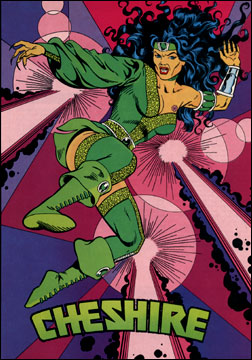
Cheshire- A Vietnamese assassin introduced in the 1980s run of Teen Titans, she is most known for detonating a nuke in the Middle Eastern nation of Qurac. She is the mother of Arsenal's (aka Speedy aka Green Arrow's sidekick) daughter. During the course of this series, she has another kid, too. She is known for creating poisons and being a pretty badass martial artist.
Deadshot- My favorite character of all time. Starting his career in a 1950s issue of Batman, he is a rich boy turned assassin. Claiming to never miss, he was a not-very-convincing villain for Batman throughout the 70s. Finally, John Ostrander put him in the ground floor of the Suicide Squad and even created a mini-series devoted to him. These stories fleshed out exactly why Floyd Lawton has a death wish, why he can't seem to shoot Batman and what his messed up family history is all about. Since the end of the Squad, he pops up as a go-to villain every now and then. Christos Gage wrote a mini-series about him in the 2000s that gave him a new wife and child (after losing his son in a most grisly way back in the 80s). His kid is now his Achilles Heel. He has had one of the better arcs of a villain over the years and I love to see where writers take him.
Those were the established members. New for this series are...
Scandal- At first just a middle-management type in a business suit with a clipboard, she reveals her warrior nature halfway through Villains United and, by the end, we learn she is the daughter of Vandal Savage. Vandal Savage is an immortal villain who was a cave man (comics!) and has menaced pretty much every hero in the DCU at some point. Scandal wields the Lamentation Blades (the most heavy metal name for a weapon ever) and is a proud lesbian. She later develops a weird father/daughter thing with Batman's enemy, Bane.
Ragdoll- The original Ragdoll is a Golden Age villain like the Fiddler (the poor schmuck killed in issue 1). Ragdoll's powers are being floppy. In James Robinson's Starman run the original Ragdoll had a son who had his powers of floppiness and began a weird Charles Manson-style murder cult in Opal City. That Ragdoll was genuinely creepy in a Joker kind of way. This Ragdoll is another brother born without his family's triple-jointed abilities. So, he has has surgery after surgery to make his body bend and contort in unnatural ways (he alludes to having had his bait and tackle removed, yikes). He is ever so polite but is into highly unnatural sex acts.
The Parademon- I thought this was a fascinating idea. Darkseid (the biggest bad guy of the DCU) has an army of monsters he calls Parademons. We never find out how but one has managed to get away and start a life for himself on Earth. Due to the twisted torture he endured all throughout his life, he thinks the homicidal Ragdoll is some sort of clown and pain makes him giggle. Very much a "fish out of water" getting accustomed to Earth, he is disturbing in his own way.
The seventh and eighth members are introduced in the mini-series when Knockout and Mad Hatter are brought in to take the place of a departed member and a dearly departed member.
Knockout is another subject of Darkseid (this time one of his Female Furies) who first appeared in the 1990s to menace Superboy. She also served with Deadshot in a brief incarnation of the Suicide Squad but never seems to mention it. She is super strong...think She-Hulk and (minor spoiler) the lover of Scandal Savage.
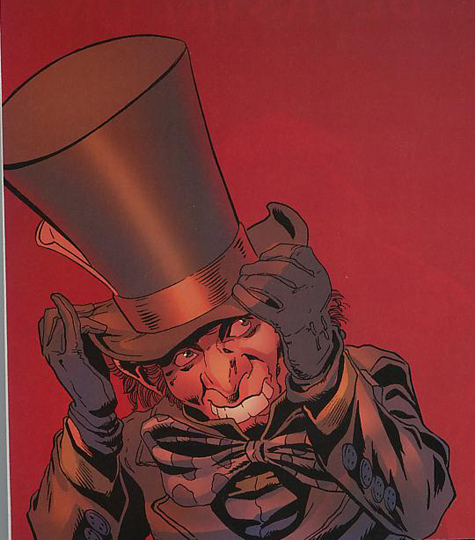
Mad Hatter- Any fan of Batman should know this Alice in Wonderland-obsessed loony. To bolster their ranks, Hatter is recruited by Catman in the mini-series but never really does much good as a team member. He likes to put little hats on his food before he eats it. As much as I enjoy some of Simone's interpretations of certain characters, her Hatter never really took off for me.
The remainder of the Villains United series is a lumbering beast in terms of plot. I have decided not to spoil things (as best I can). You can probably read between the lines and figure out which characters die or leave. If there is a major spoiler, I will warn first.
The remainder of Villains United covers some team making ground. The group is ambushed in issue 2 by a cadre of Society criminals. This is the issue where we finally get to see Catman be a badass. Issue three finally brings the team together by having them all tortured at the hands of the Crime Doctor. By the time they escape, they mostly trust and have bonded with each other. Nice bit of work by Simone and the series is only half over.
Issue 4 is a little side trip to mostly tie into an issue of Firestorm without the team meeting him. The team uncovers the Society's master plan, to mind-wipe the heroes of Earth. However, all this is just a smokescreen. Issue 5 features the group trying to determine who Mockingbird is by breaking into a Society safehouse. It ends with Catman offering the group up to do a suicide run against the Society.
At this point, the plot almost breaks down due to the nature of the crossover and Simone's need to build a self-contained story. Cheshire tricks one of the Six into knocking her up so that, if Mockingbird kills her daughter, she has a spare. She is also able to turn various members against each other as she reveals who really killed Catman's lions back in issue 1.
All these revelations come fast and furious to get to the point of Issue 6, a big ol' fight between the Society and the Six in the House of Secrets. By the end, several of the Six have been gunned down. One is dead and (minor spoiler you could probably figure out) Knockout is revealed to have been a mole for the Six within the Society the whole time. You get some pretty awesome match ups in this issue, my favorite being the Deadshot/Deathstroke shoot-out. The anti-climax of the whole thing is the reveal that Mockingbird is, in fact, Lex Luthor. I know, confusing, right?
This is where a little more Infinite Crisis knowledge is needed. Villains United actually did plant some clues as the the nature of Infinite Crisis in the last few issues. Sinestro is shown capturing Lady Quark and Pariah is brought in and killed by the Society's Lex. Readers of the original Crisis on Infinite Earths may recall that these two played decent roles in that story.
The reason Waid thought the good old days were coming back was because the main gist of Infinite Crisis is that the Golden Age Superman and Lois Lane return to "fix" the overly dark, bloody DCU. Helping them is Superboy Prime (who is from...sigh..."our" Earth...long story) and Alexander Luthor, who came from Earth 3. The thing about Earth 3 is that evil and good are swapped. So, Bruce Wayne is a criminal mastermind named Owlman and Clark Kent is Ultraman, another villain. One of the few heroes is Lex Luthor, who sent his son to safety as his Earth was destroyed in the original Crisis. The messed up thing about all this is that these four surviving characters were all heroes and good guys in the original Crisis. They all made sacrifices to save the universe. In Infinite Crisis, Alexander Luthor disguises himself as "Lex" and creates the Society as a failsafe plan to conquer the planet if his really convoluted plan to recreate the multiverse doesn't work. So the Lex who is running the Secret Six is the "original" Lex Luthor and the Society Lex is Alexander Luthor from Earth 3 (and the only way to tell them apart is eye color). Comics!
The real message of Infinite Crisis seemed to be that the bloodlust of modern comic fans can corrupt even the good intentions of the original Superman. If you are a character in modern comics, prepare to kill or be killed. The guys trying to bring back the innocence of an earlier time are defeated and the status quo remains intact. It is kind of a fucked up series if you think about it.
The Villains United special actually does what the mini-series promised to do, which is focus on the Society more than the Secret Six (although they do appear). After the Society creates worldwide jail breaks so they will have an army to march on Metropolis with, the Secret Six get the scoop on the attack from Scarecrow and Amos Fortune, warning the heroes in time for them to prepare for the battle. The Six decide to stay out of the whole conflict and offer their services to the highest bidder while remaining a team. This wrote them out of Infinite Crisis and was more of a way to move pieces around between issues of Crisis than to move the story of the Six forward.
The Secret Six Mini-series followed a few months after the end of Infinite Crisis. With Brad Walker (a Tim Sale disciple if ever I saw one) on art this time around, the Six find themselves under attack from a variety loose ends from the Villains United series (including Dr. Psycho and Vandal Savage). A few more c-listers die in the course of this series but the fun part is the addition of Mad Hatter to the line-up. Although he does nothing for the first three issues, his role in the narrative becomes clearer with Issue 4 (wherein the Six find themselves fighting the Doom Patrol).
There is betrayal, ultra-violence, sex and lots of other things not exactly reminiscent of the "good old days." Some of the Six have to deal with being parents, others have to deal with complex love lives and some just want to sit naked in their rooms and wear hats that make them trip balls all day. I think Ragdoll's character really comes into focus in these issues as just the most demented member of the group. That he keeps his dead teammate stuffed and in his room to speak with is just a great touch.
Like all "will this premise sell books" experiments, this mini-series had the unenviable task of wrapping up loose story elements while trying to set up future adventures (on the off chance the book was picked up). The Tim Sale style of art is fine for characters like Catman and Mad Hatter but looks a little weird on Deadshot or people with normal faces.
Next time, the challenges of writing a villain-based narrative.
The Secret Six: Part 1 of 6
The thing I love about comics is that the talent keeps pouring in. Say you are in the middle of really moribund stretch of shitfulness. Just wait and something good is right around the corner. In the 1980s, John Ostrander's Suicide Squad and Giffen's Justice League were breaths of fresh air. In the 90s, after crossover mania and the bubble bursting, James Robinson gave us Starman, Morrison gave us JLA and Johns gave us JSA. Say what you will about the ultimate outcome, but my favorite time to be a reader in the 2000s was in the lead up to Infinite Crisis.
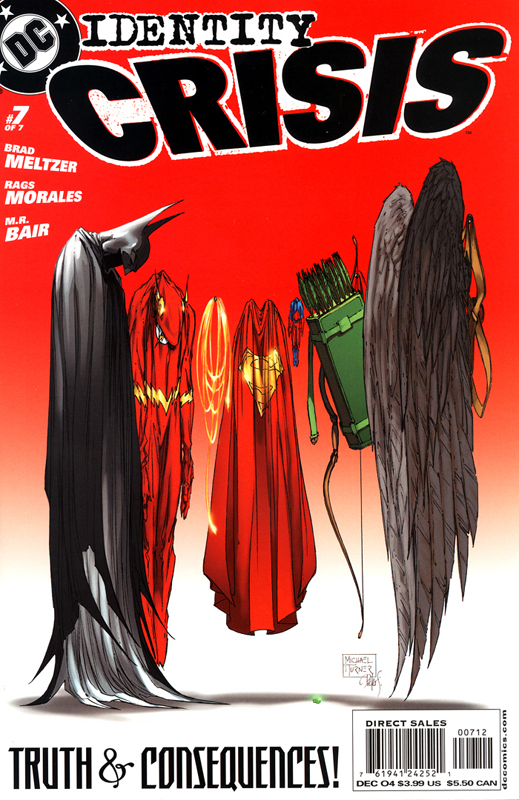
Although the series itself was a bit of a let down, the countdown was very entertaining. Everything kind of unofficially kicked off with Identity Crisis (a very divisive mini series in which it was revealed that heroes had been erasing the minds of villains for years). The series was a hit but also kind of represented the apex of grim and gritty writing within mainstream, canonical comics. There was rape, murder, insanity, violence aplenty and heroes turning against each other.
I remember reading comments from Mark Waid in the lead up to Infinite Crisis that teased a return to fun in comics rather than dour, bloody gore. Years later, Waid would succeed in turning Daredevil, Marvel's grittiest title into one of the most enjoyable and light-hearted reads. Although DC disavowed Waid's quotes by the time Infinite Crisis came out, you would have been perfectly justified in believing that was the direction DC was heading in.
The idea was to get DC to its darkest point and then rebuild. Geoff Johns wrote an arc of Justice League where Batman finds out he was mind-wiped by his former teammates for refusing to go along with their plan to mind-wipe villains. This pretty much disbanded the Justice League. In "Countdown to Infinite Crisis" the Blue Beetle was shot through the face by Max Lord. To put things in context, both of these characters were part of the "Bwahahaha" era of the Justice League where comedy and action were mixed equally. Once one of your funniest characters is killed by someone who was never a serious character, things are looking dark.
Out of Countdown, four mini-series (arguably five) were launched to build anticipation for Infinite Crisis and get all the pieces on the board. One was Day of Vengeance, where the premise was that the Spectre (God's Wrath personified) is mislead by a villain into destroying all magic in the DCU. Basically, this was the company's way of saying, "Hey, we have lots of magic characters with lots of great potential."
The second series was The OMAC Project. It followed Max Lord as he spied on and destabilized superheroes using technology a paranoid Batman had created. The culmination of the series spilled over into Wonder Woman and Superman comics where the two had to battle each other (long story). It ended with Wonder Woman murdering Max Lord on national television. The idea of the overall lead up was to separate Batman, Wonder Woman and Superman through differences of opinion. OMAC had to carry the weight of pulling that off by the time Infinite Crisis began. Superman lost control, Batman created evil tech and Wonder Woman murdered someone so all of them kind of hated each other by the end.
The third and (arguably) fourth series were tied pretty closely together. The Rann-Thanagar War was spun out of Andy Diggle's excellent Adam Strange series that revived interest in DC's Cosmic characters (like LEGION and the Omega Men). In regards to Infinite Crisis, it was a pretty useless series in that a weird hole was opening in the middle of the universe but these two giant civilizations (Rann and Thanagar, stay with me) are too busy killing each other to notice it. The little adjunct series to this was a mini called The Return of Donna Troy. As Superboy is to Superman and Nightwing is to Batman so is Donna Troy to Wonder Woman. Unfortunately, her history is garbled and confused and they needed a four issue exposition-only mini series to clear it all up. This is under the pretense of taking some of the heroes off Earth to go help with the Rann-Thanagar war. The Donna Troy thing amounted to nothing and the R-T War series was just a sci-fi version of Day of Judgment, meant to remind readers of the depth of the DCU.
Which brings me to (fucking finally) the point of this series of posts. The last mini to spin out of Countdown was Villains United. As with any crossover event, the idea is to "clean house" in some ways. Find ways to dramatically wrap up dead end storylines and cancel low selling titles while introducing new characters and new titles that will get readers hooked. Again, say what you will about the actual Infinite Crisis series but the resulting titles were almost uniformly excellent. Checkmate spun out of the OMAC Project, a new Blue Beetle series was launched that was a lot of fun, Shadowpact (a team of magic users) arose from Day of Vengeance and was mildly successful. But the best new title to spin from all this mess was The Secret Six that arose from Villains United.
I would place it as my favorite series of the 2000s. Gail Simone had recently split with Marvel and this was back in the day when Marvel lost talent to DC and not the other way around. Simone had already been given the keys to Birds of Prey (the all-female super-hero team) and proven herself adept at handling group dynamics. The powers that be handed her Villains United with the idea that Lex Luthor was gathering up a huge army of Super-Villains that would play into the Infinite Crisis story.
Comics are all about the illusion of change but this had to be a weird challenge of an assignment. Firstly, the ultimate purpose and use of the super-villain army couldn't be seen by the end of the series. Secondly, you have all the heroes busy in other books. Besides, you can't have a hero (or group of heroes) find out about the Society (as they are known in the books) because they either have to succeed in stopping the group (thereby cockblocking plans for Infinite Crisis) or they would have to fail (and considering the Countdown kicks off with the murder of Blue Beetle and the first issue of Infinite Crisis starts with the slaughter of the hero team known as The Freedom Fighters, this really isn't an option either).
Simone's solution (or maybe editorial?) was to create a group of villains who defied the requests to join the Society and actively fought against it. Again, a weird tight-rope had to be walked. If the villains were too A-list, they would need to be used in Infinite Crisis. If they were too shitty, no one would believe they could stand up to an army of villains by themselves. Thus, the Secret Six was born. Simone gathered a group of original characters with ties to continuity (Parademon, Ragdoll and Scandal) a couple of b-listers with a cult following (Cheshire and Deadshot) as well as a c-lister in need of a serious character rehab (Catman).
Today, since my preamble was so long, I am just going to cover the first issue of Villains United today. The whole series was a bait and switch of sorts, which was pulled off in this debut issue. The cover features Lex Luthor (Superman's arch enemy, duh), The Calculator (recently beefed up lame-o villain who acted as a counterpoint to Barbara Gordon's Oracle character, a sort of information merchant to villains), Dr. Psycho (Wonder Woman's enemy who Gail Simone writes the shit out of), Talia Al Ghul (Batman's one time lover and daughter of his arch-nemesis), Black Adam (the enemy of Captain Marvel) and Deathstroke the Terminator (long time enemy of the Teen Titans and pretty much most badass villain in the DCU, Deadpool over at Marvel is an homage to him). If these six were going to be your core cast, what a kickass book that would be! It would be like an evil Justice League.
Instead, the first issue is what one thought the entire series was going to be, it is about getting the band together. The core group is already assembled when this issue starts. Over the opening pages we watch the various members recruit Mr. Freeze, the Shadow Thief, Multiplex, Cheetah, Black Manta, Felix Faust and a host of other villains. All of them accept entry into the group until we get to...Catman. Last seen as a schlubby loser in Green Arrow, Simone and artist Dale Eaglesham have reinvented him as a Tarzan figure. Talia and Dr. Psycho are sent packing when Catman's pride of lions chase them away.
This leads to a scene of the inner circle of the Society debating what should be done about Catman. The rantings of Dr. Psycho in this scene are hilarious and it made me wish Gail Simone would always write him. Luthor rather ominously declares that he won't touch Catman at all.
Next, we see the Secret Six in action somewhere in the Amazon jungle. Scandal is defined as officious and overbearing. Deadshot is disinterested in the goings on. Cheshire, the Parademon and a new Ragdoll are shown as being quite effective in their deadliness. Poor Fiddler (a Golden Age Flash villain) is shown being completely useless. After the action resolves, they are given orders to kill Fiddler for his incompetence. Deadshot does so unceremoniously. This whole scene plays out as a nice summation of where the DCU is at the lead up to Infinite Crisis. The gimmicks of the Golden Age are thought of as hokey and useless. The only thing that resonates is violence, murder, bloodshed. In a few lines of dialogue, Cheshire is shown as professional and ruthless, the Parademon is oddly attached to Ragdoll but plays the part of a dumb brute and if you don't read Ragdoll's dialogue with the voice of David Hyde Pierce from Frazier in your head, you are doing it wrong.
Also, if you don't know what these people do, this is a handy intro to their skill sets as well. The Parademon is a bruiser who can fly. Ragdoll can wrap his body around his victims and squeeze them to death like a snake. Deadshot is a really good shooter and although we don't see Cheshire in action, we get the feeling she kicks ass. Later, I will get into back stories of these characters but for right now, this is all we as readers know based on the info in the issue.
Scandal and Deadshot go to recruit Catman into their group to replace Fiddler. Even though Eaglesham drops the ball on the art here, the implication is that Deathstroke has slaughtered Catman's lions on Luthor's orders (one was even with child!). Catman agrees to join the Six but also sends a mysterious letter to Green Arrow. Catman is brought the House of Secrets, the base of the Six that exists outside of normal space and time. As a nod to the original Secret Six series from the silver age, their leader is shown to be a shadowy figure known only as Mockingbird. Mockingbird reveals that he has something hanging over all of them in case they wish to leave. He also dangles the carrot of giving them each a continent to rule over if they succeed in destroying the Society.
So we have a group of villains battling another group of villains not out of any heroic impulse but from the motives of greed, fear and revenge. Readers quickly realized, we aren't going to be following Luthor and his Society so much as we will be following the Secret Six. As scummy and evil as they are, they are our protagonists. However, they aren't even as fun and interesting as the Society. How would Simone make them into readable characters?
For the next 5 parts I'll be doing issue reviews (or storyline reviews as is warranted) and discussing some aspect of the series.
Part 2 will feature the character's ties to the larger continuity of the DCU and what roles they fill in a classic team scenario. Also, I will focus on Villains United 2-6, The Villains United Special and the first five issues of the Secret Six Mini series.
Part 3 will be about the pitfalls of writing an ongoing series about villains. Issues looked at will be the last issue of the Secret Six mini, Birds of Prey 104-108 and the first six issues of the Secret Six ongoing series.
Part 4 will be about the legacy of John Ostrander's Suicide Squad series and, especially, how Deadshot serves as an example of overcoming the villain problem. I will focus on Secret Six 7-16 and Suicide Squad 67.
Part 5 will be about the rehabilitation of Catman as a viable character and some of the other nifty things Simone pulls off in her run. Issues focused on will be Secret Six 17-20, Birds of Prey 11, and Secret Six 21 to 26.
Part 6 will be a post-mortem on why the series never flew (sales wise) and what lessons can be learned. Issues covered will be Secret Six 27-28, Action Comics 896, Secret Six 29-30, Doom Patrol 19 and Secret Six 31 to 36.
Subscribe to:
Posts (Atom)


.jpg)